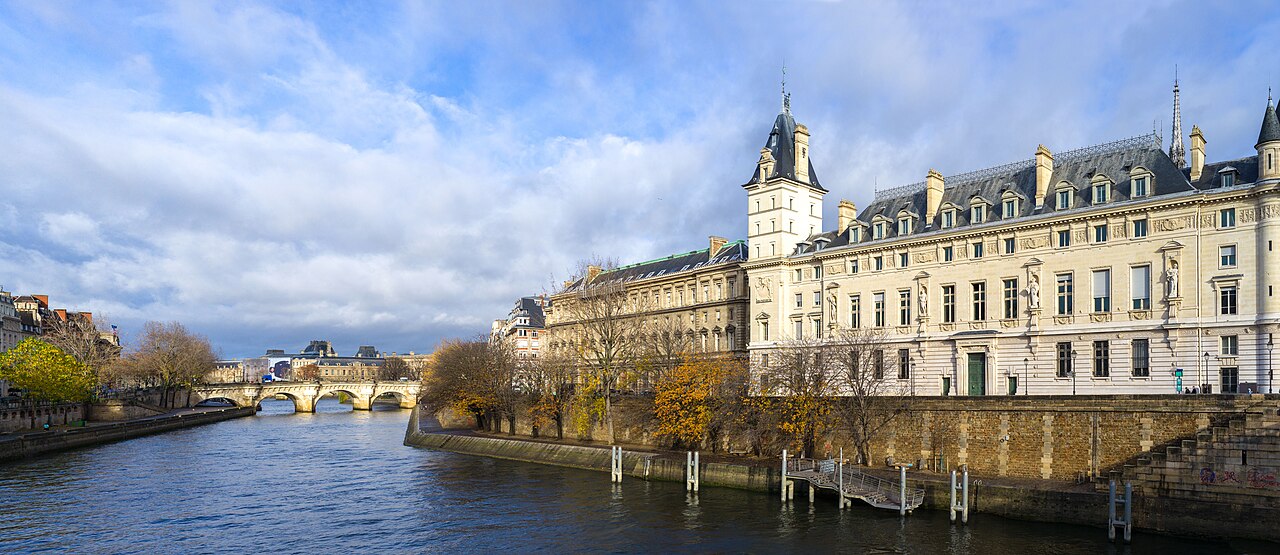
River as Commercial Artery
Before railways, the Seine moved bulk goods — firewood, stone, grain and wine — into Paris. Flat-bottomed barges and horse-towed vessels navigated seasonal water levels with skilled pilots guiding loads under bridge arches.
Guild regulations fixed tolls at bridges including the Pont Neuf, funding maintenance and royal revenues.
Working Craft and Wash Boats
Bateaux lavoirs — floating laundry boats — operated into the twentieth century, employing laundresses along the quays. Timber yards and ice warehouses lined the banks with cranes mounted on floating platforms.
Flood seasons suspended some traffic; ice floes in severe winters damaged hulls and moorings as documented in municipal archives.
Steam and Leisure in the Nineteenth Century
Steam launches introduced faster passenger service and evening promenade cruises. Illustrated guides marketed river views of new monuments after Haussmann cleared quays for promenading bourgeois crowds.
Tour Boats and Vedettes
Compact trimarans and open-deck vedettes offer short loops around Île de la Cité, competing with larger bateaux-mouches operators. Commentary routes highlight Pont Neuf history, the Louvre quay and Eiffel approaches.
Commercial passenger vessels follow strict speed limits and wake restrictions near historic quays — pilots coordinate with VNF (Voies navigables de France) river authority schedules.
Environmental and Cultural Legacy
Today hybrid-electric prototypes and bicycle ferries experiment alongside heritage craft festivals. River heritage interpretation links watercraft to Île de la Cité origins and ongoing urban ecology programmes.
- Medieval tolls and bridge clearances shaped hull design
- Wash boats persisted until the mid-twentieth century
- Steam leisure cruises expanded after 1850
- Modern fleets balance tourism with freight night transit