Before Paris: Gallic and Roman Layers
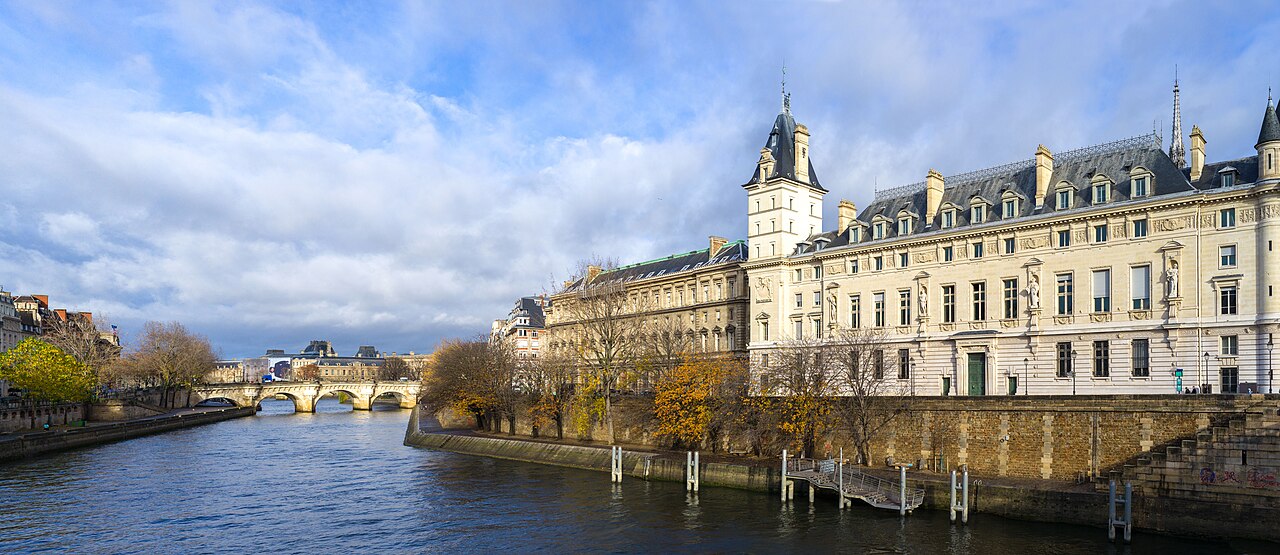
Archaeological digs beneath Notre-Dame and the Palais de Justice reveal pre-Roman occupation and a Roman forum-temple complex. Lutetia's administrators built on the island for defensibility and river access.
Roman thermae, roads and ramparts established a grid that later medieval builders adapted rather than erased — stone quays and cellar vaults still echo first-century engineering.
Medieval Royal and Sacred Centre
From the tenth century, Capetian kings expanded the palace complex that would evolve into the Palais de Justice and Conciergerie. Sainte-Chapelle and Notre-Dame made the island a twin centre of law and liturgy.
The narrow medieval street pattern — largely erased by Haussmann except along rue de la Cité — once packed merchants, clerks and courtiers between fortress walls.
Island Institutions in the Modern Era
After the Revolution, judicial functions dominated the island's public identity. The Prefecture of Police, hospitals and chapels shared tight quarters while bridge connections multiplied.
The Crypte Archéologique beneath Parvis Notre-Dame displays stratified remains from the third century through the nineteenth — an essential first stop for understanding island chronology.
Bridges and River Edge
The Pont Neuf, Pont au Change, Pont d'Arcole and Pont Saint-Louis link the island to both banks. Each bridge records a chapter of Seine navigation and watercraft history.
Quays along the island support tour embarkation, emergency services and flood-management infrastructure including removable barriers tested during high-water alerts.
Living Heritage and Visitor Flow
Millions pass through annually for Notre-Dame, Sainte-Chapelle and flower market square Place Louis-Lépine. Restoration projects after the 2019 cathedral fire have reshaped security perimeters and interpretation routes.
- Gallic oppidum and Roman Lutetia foundations
- Capetian royal palace and Sainte-Chapelle
- Revolutionary prisons and modern judiciary
- Twenty-first-century archaeology and restoration