Louis IX and the Relic Economy
King Louis IX (Saint Louis) purchased the Crown of Thorns and associated relics from Latin emperors in Constantinople, financing the acquisition through substantial royal funds. Displaying Passion relics enhanced Capetian prestige and pilgrimage traffic.
Sainte-Chapelle, consecrated in 1248, functioned as a private royal shrine within the palace precinct — not a parish church — with strict access controlled by court clergy.
Rayonnant Gothic Engineering
Architects Pierre de Montreuil and successors pushed Gothic logic to extremes: walls dissolve into glass, slender colonettes rise to star-vault ribs and tracery filters light into saturated colour.
The lower chapel served palace staff; the upper chapel housed the relics beneath a blue ceiling strewn with gold fleurs-de-lis, symbolising heavenly sovereignty.
Stained Glass as Narrative
Over 1,100 panels illustrate biblical scenes — from Creation and Exodus to the Passion and relic translation stories. Reading the windows was an act of royal education and public theology.
Twentieth- and twenty-first-century conservation removed exterior protective glazing, cleaned panels and stabilised lead cames after centuries of pollution and war damage.
Survival Through Revolution and Restoration
Revolutionaries secularised the chapel, sold some furnishings and used the structure for archival storage. Viollet-le-Duc and successors undertook nineteenth-century campaigns that shape today's appearance.
Sainte-Chapelle shares a security compound with the Palais de Justice — arrive early and expect airport-style screening; combined tickets with the Conciergerie remain popular.
Context on the Island
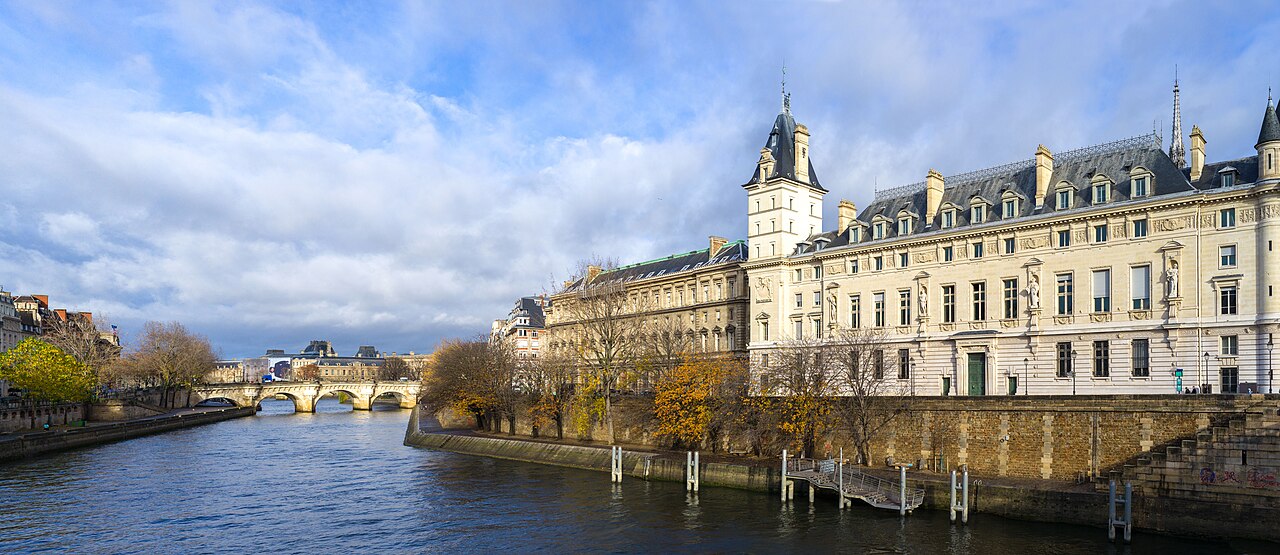
Sainte-Chapelle sits beside the Palais de Justice and Conciergerie, forming a Gothic ensemble that contrasts with Notre-Dame's broader parish scale across the parvis.
- Consecrated 1248 for Louis IX's Passion relics
- Rayonnant Gothic with unprecedented glass-to-stone ratio
- Lower and upper chapels served distinct court audiences
- Major stained-glass conservation completed in phases since 2008